How to Choose the Best DPP Software for Your Brand
As the digital twin of a physical product, Digital Product Passports have become a core business requirement. They are integral to brand transparency and regulatory compliance which makes finding the best DPP software extremely important.
The problem though is that there are more than 100 different software solutions to choose from. Each with its own pros and cons. This can make choosing the best DPP software for your needs an overwhelming task with no easy starting point. That’s why we have created this guide.
We have provided clear information below to help you make an informed decision on which DPP software would be right for you. Once you have finished reading this guide, you should have a number of clear action points to take, questions to ask vendors, and a clear starting point for finding the best DPP software for your brand.
What Is DPP Software and Why Your Brand Needs It
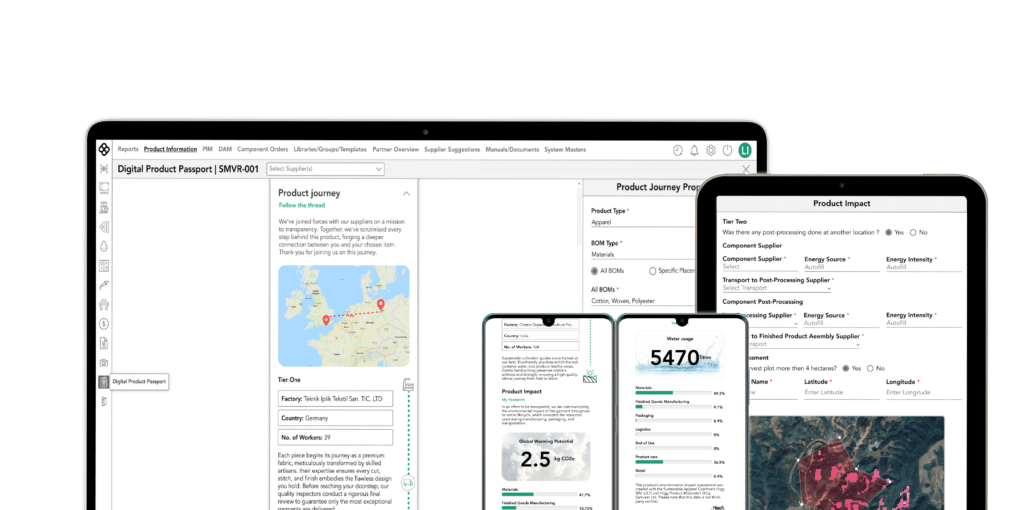
DPP software is a data management platform that collects, stores, and verifies information about a product across its entire lifecycle. It makes sure that any required data on a product is available to the right person at the right time.
It allows you to connect your physical products to the digital world, providing valuable information for regulators, recyclers, and customers.
The best software doesn’t just tick a compliance box; it uncovers DPP opportunities such as improved traceability and customer engagement.
Powered by Bombiix
Integrates seamlessly with your tools
Essential Features Every DPP Software Should Have
In order to be an effective solution, every DPP software should have the following essential features.
Data capture and integration capabilities
Seamless data collection is extremely important for digital passports, as it is the only effective way to manage the sheer volume of data required by regulations like the EU’s ESPR in 2026.
DPP software should connect to business systems such as an ERP, Product Lifecycle Management (PLM), or Supply Chain Management tools, to reference important data in real-time. This allows you to have fully up to date information for all of the products within your portfolio at every stage of its lifecycle.
Regulatory compliance and reporting tools
With regulations evolving at a fast pace, it is important for your DPP software to include automated compliance reporting and audit trails. These act as the security system of the DPP software that protects against data drift, prevents legal liabilities such as Greenwashing, and provides regulator-ready reports that can be checked instantly by a regulatory body.
A truly effective DPP software will also actively monitor all product data to ensure that the compliance status of every product is up to date. It will also alert you of any potential future non-compliance due to regulation changes in advance. Allowing you to avoid compliance gaps within your portfolio of products.
Supply chain transparency features
Supply chain transparency is the structural foundation of a Digital Product Passport. To create a legitimate passport for a product, DPP software must track three distinct layers of data:
Materials
Processes
Sustainability Metrics
Materials data contains all information on what a product is made of. Processes data contains the information on how a product was made, and Sustainability Metrics data details what kind of impact the creation of the product had on the world and environment.
Each of these data layers is not just a list, they are dynamic data points that need to be updated as a product moves through its lifecycle. This makes real-time visibility across the supply chain of a product extremely important.
How to Evaluate DPP Software Providers
Implementation speed and support quality
Fast implementation of a DPP software isn’t just turning the software on. It is essential to consider how quickly your supply chain data will become audit-ready. The best DPP software will integrate seamlessly with existing product development workflows easily.
The main things to take into account when comparing the implementation speed of a DPP software are:
The average time it takes to move from a single product pilot to a full category rollout.
Whether the software has regulatory templates for your specific industry.
If they use speedy onboarding automations that leverage APIs and AI assistance.
Compatibility with your existing PLM/ERP. This can increase implementation speed by more than 25%
Ongoing support is not just a case of technical trouble shooting. It is best to look for DPP software providers that can help with the navigation of product regulations. They should be able to tell you why a specific data point is required, as well as showing you how to add it to a product. It is also good to check if a provider offers an enhanced support window, quick response times, and training documentation for audits and supplier tasks.
Pricing transparency and scalability
Clear pricing models without hidden costs are much easier to understand, when it comes to understanding the cost of a DPP software solution. While some providers may offer a low initial cost, there may be hidden costs that emerge as your data needs grow.
There is also the possibility that a provider will introduce price jumps based on the number of suppliers that are added to the platform.
Data storage costs should be considered before committing to a provider too, as some will charge extra for the hosting of archived data that you will be legally required to keep.
A good way to unearth any hidden costs is by requesting a cost model that shows overall costs based on a 5 year period. This will clarify whether costs will spike significantly based on an expected increase in SKUs, the number of connected suppliers, or recurring data storage costs.
Common Pitfalls When Selecting DPP Software
The most common mistake brands make when selecting DPP software is treating digital product passports as a simple labeling system rather than the complex regulatory compliance system that they have become.
There are several factors that shouldn’t be overlooked to avoid pitfalls when selecting DPP software:
If a DPP software uses a QR code or database that only their app can read, this can lead to data becoming non-compliant in the future. Be sure to pick a solution that provides data in a machine-readable format. This will allow different systems to talk to each other and ensure that you remain compliant.
Software that only allows you to upload your data directly (Tier 1) can be a very costly mistake. Not only may you have to pay extra to allow for other tier levels of information to be included (e.g. Tier 2 your supplier’s data), but you could also lose out due to data gaps that can result in fines or borer seizures.
Under EU law, a digital product passport must remain accessible for 10 – 15 years. Even if it is no longer being sold. This makes beginning a partnership with a small provider risky. Especially if there is no decentralisation plan or data escrow in place. If your provider goes out of business in 3 or 4 years, this could result in digital product passports redirecting to 404 errors. Making you liable for the lack of a fully functioning DPP.
Digital Product Passports must be dynamic and reflect changes in real-time. This is something that digital storage folders are not able to do. They are only capable of storing static documents that would require a massive amount of version control to remain up to date effectively.
Taking the pilot price of a DPP software for the first year at face value is very risky. If you do, you could be hit by hidden fees for extra data storage, integration costs, and third party audits. It is much safer to ask for a total cost of ownership over 5 years.
Questions to Ask DPP Software Vendors
When asking questions of DPP vendors it is best to avoid focusing on features and instead ask “How will your software protect my market access?”. This is a very broad question that should be broken down into a number of more specific questions.
We have provided some sample questions below and grouped them by the different software capabilities that you should take into consideration.
Do you have native connectors for major ERP/PLM systems or will we need to build custom software?
Is your data machine-readable and compatible with automated government systems?
How does your system handle data collection from Tier 2 and Tier 3 suppliers?
If we terminated the contract or you went out of business, how would our data be handed back to us to avoid the QR codes on our products breaking?
Will our data be stored in an open format?
Does the platform support Role-Based Access Control? Can we show different data to a customer versus a recycler, for example?
What security systems do you use to ensure data hasn’t been tampered with?
With your software is it possible to prove exactly which individual uploaded a specific certificate at which supplier, including a timestamp?
Can audit logs be exported?
How do you prove compliance to regulators while protecting IP secrets? E.g. material ratios.
Does your product team include dedicated legal and sustainability policy experts?
Was your platform built specifically for DPP?
How many multi-tier supply chain audits has your system successfully supported?
What is your strategy for supporting regulations as they emerge?
What regulations does your roadmap include support for?
Don’t forget to focus on technical resilience, legal durability, and the vendor’s ability to evolve with changing regulations.
FAQs
Didn’t get the answer you were looking for? Here are some of the most commonly asked questions about product lifecycle management software.
How long does DPP software implementation typically take?
DPP software implementation typically takes a number of months. It can be broken down into 4 phases:
Preparation & Scoping
Supply Chain Onboarding
Technical Integration & Pilot
Full Rollout & Optimization
Can DPP software integrate with existing PLM systems?
Yes, the best DPP solutions integrate seamlessly with existing product lifecycle management tools through APIs and standard data formats.
What happens to our data if we change DPP providers?
This depends on the provider you are moving away from and their policies. We recommend looking for providers that guarantee data portability and never hold your product data hostage.
How much does DPP software typically cost?
Pricing varies widely due to the different types of pricing structure. Transparent providers will offer clear pricing models without hidden fees, but we recommend asking for a total cost of ownership figure over a 5 year period, to get a realistic idea of how much the DPP software will cost you in the long run.