
Digital Asset Management System Built by Product People for Product Teams
A Digital Asset Management system (DAM) should not just act as a digital warehouse for storing files and forgetting about them. That’s why we’ve created a DAM system that connects to your product design ecosystem to become an integrated part of your product development workflows.
We know how frustrating it is to have systems that don’t connect properly. No one wants to have multiple versions of the same digital asset in different places, with no clue as to which file is the ‘true master’.
By connecting our DAM to your other product development systems, you can create a ‘single source of truth’ for every one of your visual digital assets.
A well-implemented digital asset management system can reduce production time by up to 30% through increased asset reuse, automation of repetitive tasks, and eliminating duplicate content creation.
Source: https://www.jahia.com/blog/10-benefits-of-digital-asset-management-dam-in-2025
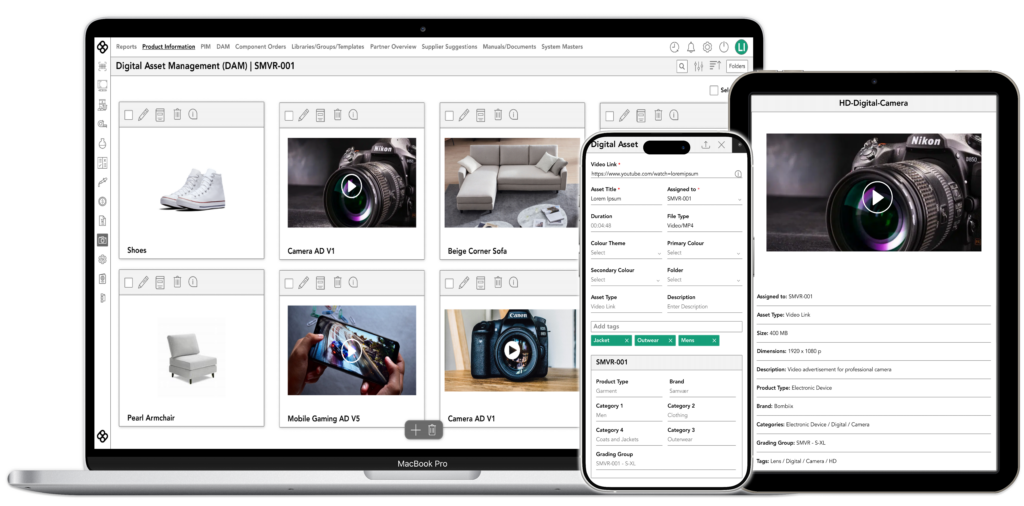
What is a digital asset management system and why product teams need one
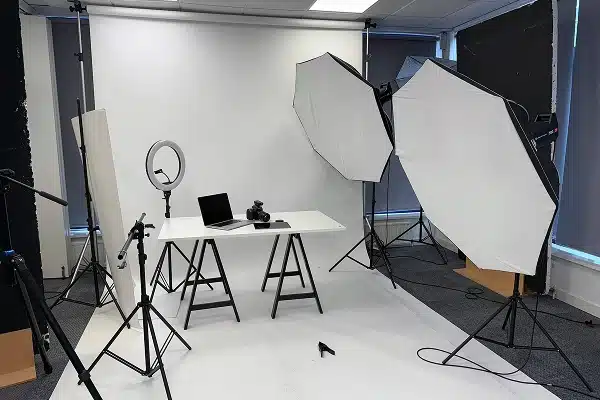
Why most DAM systems fail product teams
There are several reasons that most DAM management systems fail product teams. We have provided a list of the most common issues below:
Lack of context
The big mistake that most DAM software systems make is that they treat every file as a self-contained document. They don’t consider the extra step of adding context to a file, to make it easier to find and understand. A photo of a component is just a photo of a component. There is no context for what the component is a part of or which factory provided it.
Ignore seasonality
Generic DAMs don’t take seasonality into account either. They file digital assets into static folders. This can result in products being stuck in a ‘summer’ folder and a copy of the file having to be made for an autumn collection. This results in reduced asset reuse, and version control issues.
Final file focus
CAD files and 3D renders can be problematic for a generic DAM to handle. They are built to focus on the final image that will be used on a website, with no consideration for ‘work in progress’ assets that are used to create the final result. There are no in-depth previews that allow a technical designer to sign something off.
Limited access options
At Bombiix we’ve dealt with all of these problems ourselves. That’s why our DAM is designed to avoid them all, and to work in harmony with your product development workflow.
Bombiix DAM: designed for product development workflows
Our DAM solution works alongside your product workflow to help increase efficiency and productivity, and to make your product team’s lives easier.
It is fully integrated with our PLM and PIM systems to create a product development system that is updated in real time with every digital asset being tied to the timelines and milestones that move a product towards its launch.
It also allows for different users to have unique access privileges. This ensures that the right parties have the right level of access, and avoids potential accidentaldeletion of assets by external partners.
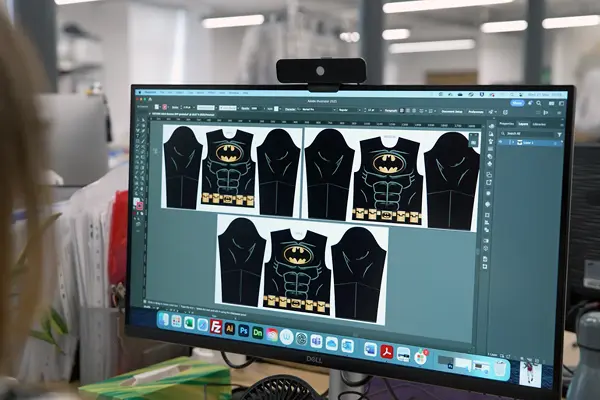
Asset organisation that mirrors your product structure
We align your media asset management software with your workflow by grouping assets based on your internal product categories. The connection between the DAM and PLM allows for category data to be inherited without the need for manual data entry.
Our DAM removes the importance of a file name, and instead focuses on assigning metadata that makes a digital asset more searchable. Instead of assigning a file to a folder, our DAM uses AI tagging to generate a description of a digital asset which provides specific searchable keywords.
This allows you to filter search results quickly and easily. If you want to see all digital assets for a specific season or collection, it’s as simple as searching for the product type and a season e.g. winter jumpers 2026.
There’s no need to search through folders for a specific file, and products that carry over from one season to the next can reuse the original asset, rather than a copy needing to be made.
Version control built for design iterations
The product development process often has a ‘final’ design going through numerous iterations which can make version control a nightmare. All it takes is for a revision to get lost in an email chain, and suddenly everyone is working from a different ‘final’ design.
To eliminate this confusion, we treat version control as a core part of a product’s DNA. The connection between our PLM and DAM allows for the revision of an asset to be tracked against the timeline of a product to ensure that the ‘single source of truth’ is always the most recent version.
Our DAM uses a ‘stack model’ that helps to keep your workspace clean. The new version of a file does not replace the previous one, it just sits on top as the latest version. This allows for immediate rollback of designs too, as the previous version of the asset is still available for use.
Key features that set Bombiix apart from traditional DAM systems
While standalone DAM solutions such as Adobe or Acquia are made to manage content, our digital asset management software is built specifically for managing products.
Connected to your entire product ecosystem
Rather being designed to store finished marketing content, our DAM is designed to bridge the gap between creative teams, the production floor, and sales channels. The fully integrated ecosystem that we offer is much more effective than a standalone DAM management system.
With our DAM, a file is never just a file. Context is added to the file through AI tagging and metadata, and once a file is added to the DAM, it becomes available in the PLM too.
Through its seamless integration with our Product Information Management (PIM) system, the DAM also allows for digital assets to be used to create imagery for connected sales channels.
There is no need to create multiple different versions of an asset for each sales channel. Instead the DAM provides an original asset which the PIM pulls through and formats for different sales channels. A single asset can be used to populate imagery across all of your sales channels without the need for manual editing.
component is a part of or which factory provided it.
Built-in approval workflows for product teams
Approval workflows that are designed for general marketing purposes are not sufficient for use with product development. This is because errors on technical documents are not just an inconvenience, they result in lost revenue and wasted time.
With our integrated systems, we can tie gated-milestones to your critical path. This prevents products from being released before the required compliance actions have been completed. Until all required approvals are in place, you cannot generate a purchase order for a product.
Fast implementation with zero setup fees
Traditional DAM solutions require a long onboarding process that can take months in order for them to be fully integrated with your existing systems. This often gets held up by the need for dedicated dev work, and transferring of assets.
At Bombiix, our implementation process has been developed with product teams in mind. There are zero setup fees, and we work alongside you every step of the way with personal support through live chats and calls.
With our help, you can be up and running in a matter of weeks. You don’t have to wait for months and months until you see value.

Pricing that scales with your team, not your asset count
Our transparent pricing scales with one thing: users. Your subscription price is based solely on how many team members will be accessing the system.
There are no hidden fees for different user tiers or increased storage capacity. This is because we don’t believe in punishing product companies for being successful and growing. Our solutions will scale with you, but their costs won’t.

Ready to centralise your product assets?
If you’re looking for a better way to manage your digital assets, that will allow your team to spend more of their time on product development and less time on menial busywork, request a free demo today.

Loved by product people, trusted by..










FAQs
How does Bombiix DAM differ from standalone DAM solutions like Adobe or Acquia?
Unlike traditional DAM systems, Bombiix connects asset management directly to product development workflows and critical path tracking. This creates a complete product ecosystem that improves efficiency and productivity.
Can Bombiix DAM integrate with our existing design and production tools?
Yes, our DAM offers API connections that allow it to work alongside your existing CAD, ERP, and communication platforms without complex middleware.
How quickly can we get started with Bombiix DAM?
Most teams are up and running within weeks, not months, with personal onboarding support via chat and live sessions.
What's included in the pricing - are there hidden fees for storage or users?
We provide transparent subscription pricing with full functionality from day one. There are no hidden fees or storage limits/tiers. Cloud fees are chargeable on our Atlas and Hercules packages.