Solutions

About Bombiix PLM

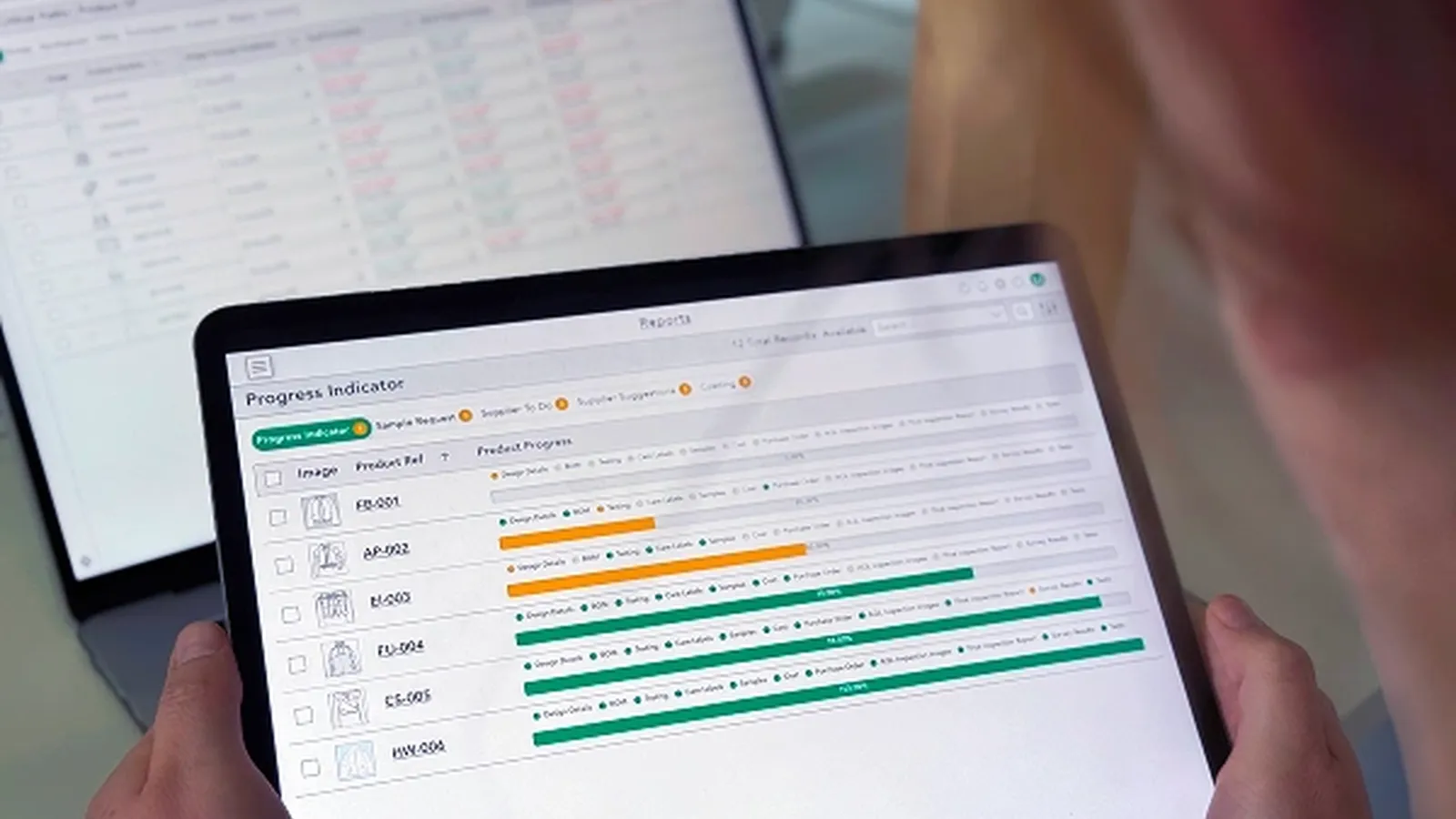
Manage your entire product lifecycle, from initial concept and design through to development, manufacturing and bringing it to shelves.

Plm1
Solutions

About Bombiix DPP

Automate your Digital Product Passports in a way that’s affordable, scalable and removes the need for multiple complex systems.

Dpp1
Solutions

About Bombiix PIM

Unify all your product information with an automated PIM that ensures consistency and accuracy while reducing workload and manual data entry.

Pim1
Solutions

About Bombiix DAM

Organise, store and access all your digital assets into a single, easy-to-use hub so you can effortlessly find, share and use content whenever you need to.

Dam 001

What Is Digital Asset Management?
A Complete Guide
for Product Teams

What is DAM? Digital Asset Management (DAM) is the systematic approach to organizing, storing, and distributing digital files. It does more than simply hold files in a specific folder structure though; it acts as a centralised “single source of truth” for everything that makes your brand visual. Ensuring that the right people have the right visual assets at the right time.

Pexels work2survive 32620372
Pexels pixabay 159518

Understanding digital asset management fundamentals

DAM asset management software acts as your fully searchable library for digital imagery, videos, UI components and more. It is designed to make things easy to find, with all files being organised in a meticulous and logical way. 

With the rise of digital-first product creation, physical prototypes are becoming a thing of the past. This places much more emphasis on the need for digital assets to be easy to find and organise.

Track

Core components of a DAM system

There are 4 core components of a DAM system:

Central Repository: The “Single Source of Truth”
Metadata Management: The “Digital DNA”
Search Functionality: The “Google” for Your Brand
Access Controls: The “Gatekeeper”

Each of these plays a pivotal role in ensuring that a DAM system is effective and efficient.

The central repository ensures that every digital asset can be found in one convenient place. It helps teams to use the latest version of a logo or product image without having to sift through multiple files to determine which is the right one to use. There is a single master file which everyone knows to use. Complicated version control becomes a thing of the past.

Metadata management adds an extra layer of information to your digital assets, so you don’t have to rely on file names as your only way to work out what a file contains. With extra information such as the photographer, what collection the file is for, and a description of what the file contains, you can find the right file easily rather than trying to work out if you want to use img_356.jpg or img_635.jpg with no other context.

Search functionality in a DAM is very efficient and effective due to its relationship with metadata. It allows you to find the correct file quickly and easily by using intelligent filters and metadata search term matching. Advanced DAM systems even use AI to scan an image and add relevant tags to it which makes it even more searchable.

Access control helps to ensure that the right users have the right permissions within a DAM. This enables you to assign specific permissions to a senior team member that more junior team members do not have. To minimise mess and confusion, only allowing certain team members to upload, download and delete digital assets is the safest option.  For stronger security, you can also provide access to external parties for a single digital asset while keeping the rest of the library safely locked away.

Pexels mikael blomkvist 6476261

How DAM differs from cloud storage

It’s important to note that cloud storage solutions such as Google Drive and Dropbox are not the same as a DAM management platform. Cloud storage is basic whereas DAM platforms are intelligent.

Cloud storage systems rely heavily on folders and file paths. This can make finding the correct file difficult, if you don’t know what the file path is. A DAM does not rely on file paths or folders, it understands what a file is and how it should be used. All you need to do is use the search functionality and you’ll have the right file in seconds.

DAM systems allow for simple image manipulation within the software too. If you want to crop an image, you can do that within the DAM and generate it from the original high res asset. This is something that is not possible with cloud storage. To crop an image you will need to download it, edit the image in a separate software, and upload the new cropped image.

Cloud storage does not provide any contextual information for a digital asset. All you get is the file name. Digital Asset Management platforms enrich files with extra contextual information such as usage rights, expiration dates, and more.

Planning management

Why product teams struggle without proper asset management

Without proper asset management, product teams spend more time navigating a digital labyrinth than they do creating products. Creativity and mental bandwidth is wasted on trying to find the right files, instead of being used to develop a new product.

There are some key issues that occur when you don’t have proper asset management.

Rabbit hole searches: It’s not easy to find a file. You have to dig through files to find it.
Version uncertainty: Is the file you’re using actually the latest version? You can’t be sure.
Broken branding: Different image styles lead to an inconsistent and unpolished brand.
Collaboration breakdown: Only one person has access to the right files. If they are in a meeting or on holiday, workflow grinds to a halt.

All of these issues can be easily resolved by using a DAM instead of relying on cloud storage.

Essential features every DAM system should have

Metadata tagging

Rather than having to waste precious time searching through a folder of images to find the right one, with the help of metadata tagging you can simply search for related keywords and the DAM will find the right image in seconds.

Version control

The DAM ensures that every image within the platform is the latest available version. If someone updates a file 5 minutes before you use it, you will be using the master version without having to worry about whether it’s up to date. Easy version rollback is also available on most DAM platforms.

User permissions

Each user has their own unique level of access for the platform. This extends to external agencies that can be restricted to only uploading their work and viewing the relevant branding guidelines within the platform. Preventing them from accidentally deleting files or editing existing assets that you didn’t want them to touch.

Advanced search

No one has to worry about remembering specific file names with advanced search. This is because AI scans all assets that are added and adds tags to each one. Instead of trying to find a specific file with a snowtopped mountain by sifting through image files, you can simply search for the term “snow+mountain” and easily find the right file in seconds.

Integration options

A DAM should not be used as a siloed digital asset library. It should be capable of connecting with other systems such as a PLM or PIM seamlessly, to ensure that changes in one system do not disrupt the product team’s workflow.

Types of digital assets in product development

There are a number of different digital assets in product development that need to be treated differently from one another. A high resolution 3D model of a product cannot be treated in the same way as a PDF. It is important to categorise your assets effectively, to ensure that your DAM is fully functional.

Loved by product people, trusted by...

Benefits of implementing digital asset management

People and Data - Compagnons

Measurable impact on productivity

The biggest impact a DAM can have is on your team’s productivity. This is because, every minute that is spent looking for a file, is a minute wasted that could have been spent working towards the development of a product. The time of team members with specific expertise and ability is essentially being wasted on digital chores.

By ending the asset hunt of having to remember file names and locations, and replacing it with easily discoverable assets in a centralised platform, product teams can increase their productivity dramatically. If you need a file, all you do is search for it in the DAM assets library, and you’ll have the right file in a matter of seconds.

Effective DAMs can help to streamline approval processes too. They do this by allowing for comments and notes to be left directly on an asset. This moves all approval conversations into one place and provides approval notifications, as soon as an asset’s status is set to “approved”.

Balazs ketyi s Scmok4 Iq1o unsplash

Choosing the right DAM solution for your team

Choosing the right DAM digital asset management solution for your team hinges on 5 central criteria that you should evaluate a solution against.

Ease of use
Integration capabilities
Scalability
Pricing transparency
Implementation speed

Ease of use is extremely important because, if your team doesn’t take to the platform and chooses to use cloud sharing instead, it can be a complete waste of money. The purpose of a DAM is to improve team efficiency. If it falls at the first hurdle, it’s not worth using.

Just like you

All of the software that we provide is designed by product people for product people.

The best DAM solutions can be readily integrated with multiple systems to create a robust network of product management. They don’t require repetitive data entry or manual data transfer because they can send information directly to a connected PIM, PLM or ERP. If a DAM requires extensive dev work to connect it to other systems, that’s a red flag that it may not be easy to integrate.

Assets libraries grow rapidly. Any DAM solution that you choose should be able to manage the fast scaling of assets and data. If a DAM uses cloud-based storage, it is a green flag that the level of storage can be scaled instantly. Accommodating additional users, assets, file formats, and making use of emerging technologies.   

Some DAM providers use scaling as an excuse to ramp up their prices. The cost of a DAM may look good upfront, but as soon as you grow there can be hidden costs that massively increase the cost of your Digital Asset Management. Looking for companies that offer clear and transparent pricing tiers is the best way to ensure that there are no hidden costs.

In the fast-paced world of product development, the quicker you can implement a solution the better. Unfortunately, with some DAM providers implementation timelines can take several months with some only being fully implemented after a whole year. Finding out how quickly a DAM solution will be implemented can be a big factor in choosing which DAM is best for you.

Implementation considerations

To ensure that a DAM implementation goes smoothly you should treat it as a culture shift, not simply flipping a switch.

The following things should be done to make the implementation go more smoothly.

Getting started with digital asset management

If you’re looking to get started with a new DAM platform, we are here to help. Our team can talk you through the process of setting up your DAM, and advise you on the best steps to take to allow for a smooth transition and implementation.

Get in touch with our friendly team, and we’ll be happy to give you a free demo of our software.

Speak to the team

By submitting this form, I accept the Bombiix Privacy Policy

You have questions
We have the answers

Still have questions about Bombiix or DAM?
We’ve answered a few.

Lucy
Still have a question?

We’re here to help

Contact Us

Get started with Bombiix today

Ready to get started with Bombiix?
Let’s transform your product data together!

Contact Us
Lucy2
Woman working

Schedule a free personalised demo

Book a customised demo to see how Bombiix can streamline your product development process.

Book a Demo
Lucy2
Book a 60 minute demo compagnons

Bombiix empowers product teams with
cutting-edge, affordable technology that simplifies
processes, reduces admin, and enables smarter,
more ethical decisions.

Contact Support
info@bombiix.com +44 (0) 800 001 6455
Ergo
Bridgehead Business Park,
Meadow Rd,
Hessle
HU13 0GD
Get Directions
© 2026 bombiix. All rights reserved.
|
Back to Top