Solutions

About Bombiix PLM

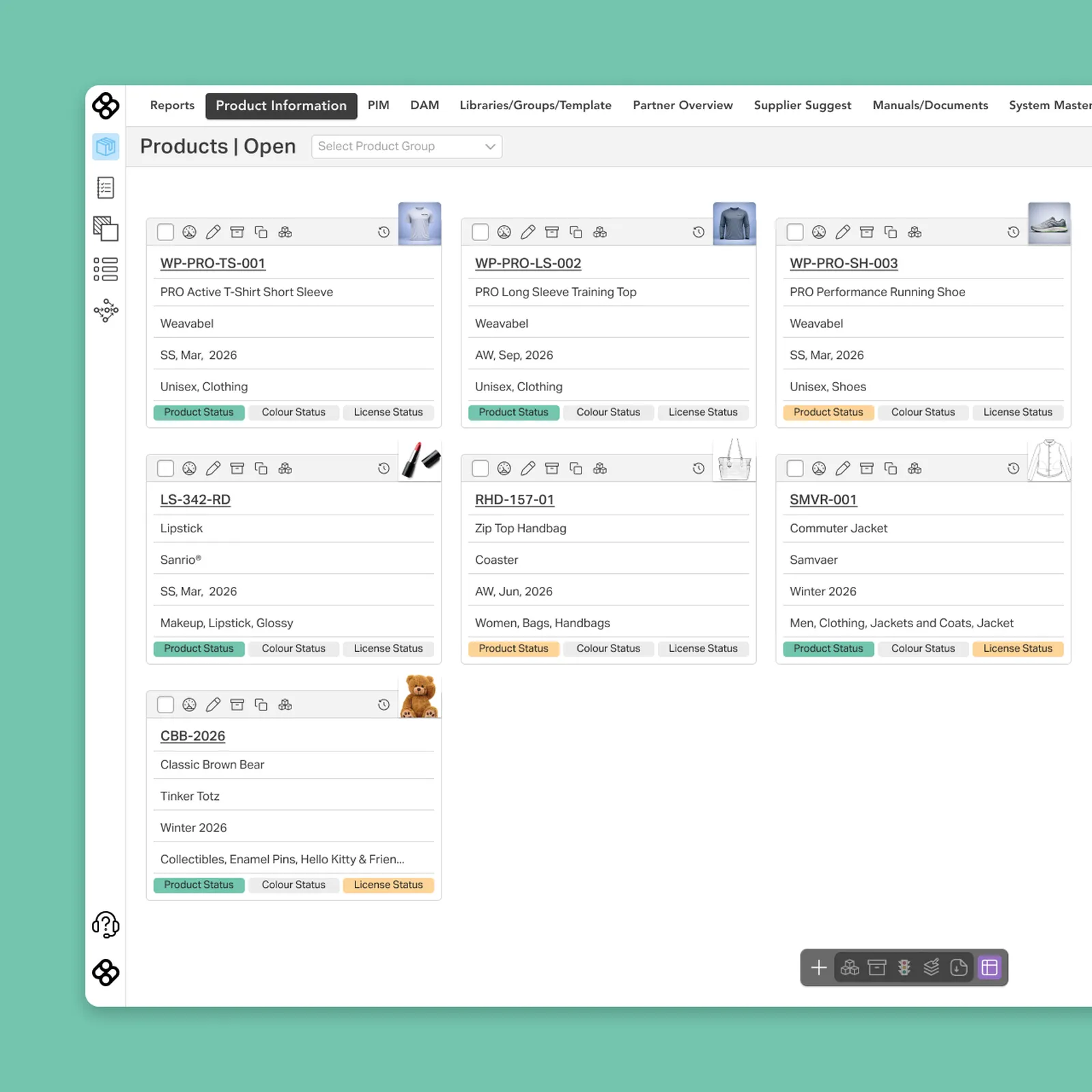
Manage your entire product lifecycle, from initial concept and design through to development, manufacturing and bringing it to shelves.

Plm1
Solutions

About Bombiix DPP

Automate your Digital Product Passports in a way that’s affordable, scalable and removes the need for multiple complex systems.

Dpp1
Solutions

About Bombiix PIM

Unify all your product information with an automated PIM that ensures consistency and accuracy while reducing workload and manual data entry.

Pim1
Solutions

About Bombiix DAM

Organise, store and access all your digital assets into a single, easy-to-use hub so you can effortlessly find, share and use content whenever you need to.

Dam 001
Fashion & Apparel

Fashion PLM: The complete guide to Product Lifecycle Management in Fashion

PLM software for fashion has the power to transform your chaotic product development process into a streamlined, connected workflow.

Using our first-hand industry experience, we’ve created a definitive resource for fashion professions seeking to understand the value of PLM and its many benefits.

Sector - Apparel
Loved by product people, trusted by...
Bombiix screenshot

What is fashion PLM and why does it matter?

In the most simplest terms, PLM software for the fashion industry connects the dots between design, sourcing and production. 

Fashion PLM manages the entire lifecycle of a garment, from initial design to retail, integrating design, production and supply chain processes to improve collaboration and reduce time-to-market.

Source: https://www.just-style.com/buyers-guide/product-lifecycle-management/  

PLM matters in the fashion industry because it can:

Get products to market faster
Ensure quality and consistency
Drive collaboration across all your teams
Reduce product development costs
Support compliance and sustainability goals

See how Bombiix makes product development easier

Lucy2
Lucy Blackley
CPO & Founder

Key challenges in fashion product development

Product development in fashion moves fast, and the systems supporting it often can’t keep up. 

Many teams we speak with are still juggling disconnected tools, wasting time on manual processes and dealing with increasingly complex supply chains. 

Some of the most common challenges include:

Fragmented communication

Critical updates, technical changes, and feedback often get buried across separate channels. Information can sit across informal messaging apps, email threads, and disconnected spreadsheets.

When a design revision, measurement change, or fabric substitution isn't captured in a single centralised platform, it creates serious bottlenecks. There is a risk of technical teams working from outdated tech packs, suppliers manufacturing against obsolete specifications, and regional stakeholders operating without any knowledge of potential delays.

This fragmentation leads to expensive samples, missed critical-path milestones, unexpected production errors, and increased time-to-market.

Version control issues

Fast moving industries such as fashion and cosmetics often require tech packs, bill of materials (BOM), and approval statuses go through dozens of iterations between initial concept and mass production. When these changes are managed manually via emailed PDFs, local drives, or static spreadsheets, maintaining a reliable record becomes almost impossible. This creates uncertainty about which document represents the true single source of truth.

Factories may begin sampling using outdated tech pack revisions, resulting in incorrect seam allowances, wrong colorways, or mismatched trim placements. Product approvals can become scattered across email threads, leaving teams uncertain whether a component was signed off or flagged for modification. Discrepancies between the designer's latest revision and the pattern maker's working file can lead to avoidable physical sampling cycles, inflated development costs, and extended time-to-market.

When version control breaks down, product teams spend critical hours reconciling conflicting files and chasing status updates rather than focusing on product quality and deadline execution.

Compliance tracking

Navigating international trade standards, chemical safety rules, and emerging circularity directives makes compliance one of the most complex parts of fashion product development.

When compliance data is managed across disconnected spreadsheets, local drives, and supplier email threads, maintaining full regulatory visibility becomes extremely difficult.

Fabric performance tests, colorfastness reports, and chemical safety certifications are often stored in isolated files. This creates risk when verifying if a specific batch or style meets destination market regulations before shipping.

Manually cross-referencing regional compliance requirements for every SKU increases administrative overhead and leaves room for human error.

Without a central system to automate expiration alerts, log test results, and attach verified certificates directly to tech packs, compliance tracking shifts from a proactive safeguard to a reactive bottleneck that delays product launches.

Time-to-market pressures

In modern fashion retail, trend cycles move at unprecedented speeds, forcing product teams to constantly shrink development timelines without compromising quality.

Waiting days or weeks for physical samples to travel between overseas factories and local design hubs creates long dead-periods in the critical path, leaving little room to capitalise on real-time market trends.

Intense deadline pressure can lead to teams skipping performance tests, and pre-costing reviews. This rush can lead to quality defects during mass production, unexpected margin loss, and order cancellations.

Operating sequentially rather than concurrently increases the risk in long delays due to a domino effect that can push back production slots and risk missing retail delivery windows.

Arriving to market even two weeks behind a trend peak means missing peak customer demand, resulting in unsold inventory, heavy discounting, and diminished brand equity.

Without streamlined workflows, real-time collaboration, and digital sampling tools, the constant demand for speed forces product teams to burn out while trying to keep pace with dynamic market demand.


Product team overwhelm

Creative and technical professionals are tasked with managing hundreds of style variables, supplier deadlines, and sample iterations simultaneously. However, when product data is scattered across disconnected systems, team members end up spending the majority of their working day completing admin tasks rather than driving product innovation or design execution.

Designers and developers have to spend hours manually copying data between spreadsheets, inputting bill-of-materials (BOM) information, compiling tech packs, and tracking down approval statuses via email. Chasing updates takes up hours that would be better used for range planning, trend research, and fit optimisation.

Skilled product developers are forced to prioritise operational firefighting over strategic initiatives. Which is a waste of talented resources on administrative tasks. Operating in a constant state of reactive urgency creates fatigue, increases human error rates during critical handoffs, and undermines morale across design and development departments.

When product teams are bogged down by administrative noise, the brand’s overall creative agility suffers, directly impacting product quality and market responsiveness.

How fashion PLM software transforms product development

Get products to market faster

Fashion PLM gives you full visibility of your entire product lifecycle – teams and suppliers are all connected, decisions are made quickly and with confidence, bottlenecks are dealt with early and delays disappear.

Ensure quality and consistency

PLM software for fashion allows you to build consistency into your product development process – from your first sketch to hitting storefronts. Specs, test results and supplier approvals all live in one clear space.

Drive collaboration across all teams

PLM systems bring fashion teams together. Product design and development, manufacturing and marketing, all working from one system and removing the need for complicated spreadsheets, email threads and siloed information.

Reduce product development costs

A PLM system for fashion removes unnecessary admin tasks that eat into your margins. You make smarter use of your resources, freeing your team to focus on innovation, not firefighting.

Support compliance and sustainability goals

With clear, easily accessible data, you’re already set up for success when it comes to compliance with evolving legislation, such as Digital Product Passports (DPP) and beyond – you’re always in control and audit-ready.

Why Bombiix is leading fashion PLM

Designed by product people

Bombiix was born from one product developer’s frustrations with outdated, legacy PLMs. She lived the late nights, the overwhelm and the constant fear of missed details and deadlines. So, when we say we get it, we really do. 

Every decision we make is shaped by either our customer’s needs or our own experience in the industry, resulting in a platform that’s a true fit for product teams

Crystal clear visibility

A complete picture of your entire product lifecycle and supply chain. Connecting with DPP, PIM and DAM, Bombiix’s PLM software gives you and your team deep insights into resource management, budget spending and sustainability goals.

No more chasing files, navigating complicated spreadsheets or second-guessing every decision.

Built-in DPP compliance

Automate your DPPs and save hours manually collating, creating and managing sustainability information. Create clear, interactive, user-friendly and compliant product passports in just a few clicks​.

What’s more, because you’re equipped with the right data at the right time, you can make informed decisions about material use, manufacturing processes and supply chain.

Learn more about DPP compliance.

Essential features of fashion PLM systems

Design and development workflows

Fashion PLM systems help teams organise and manage the creative development process from the very beginning. Designers and developers can create structured tech packs, store design specifications and track revisions and styles evolve. 

Instead of juggling multiple documents and email feedback, teams can manage design iterations in one shared space. Updates are visible instantly, making it easier to collaborate, approve changes and maintain a clear record of each stage of development.

Sourcing and supplier management

Fashion supply chains are complex, often involving multiple suppliers, factories and partners across different regions. A strong PLM system helps brands bring these relationships into one connected workflow. 

Teams can manage supplier information, collaborate on materials and production details, track costs as they evolve and align purchasing with product development timelines. This creates greater transparency across the supply chain while improving communication between internal teams and external partners.

Digital Product Passport (DPP) readiness

As sustainability and regulatory requirements continue to grow, fashion brands need better visibility into their supply chains. PLM systems play an important role in helping businesses prepare for DPPs by capturing key product data at every stage of development.

From materials and manufacturing processes to certifications and supplier information, PLM platforms help brands build the traceability needed to support transparency and compliance.

Fashion PLM FAQs

Explore more
of our Sectors

Get started with Bombiix today

Ready to get started with Bombiix?
Let’s transform your product data together!

Contact Us
Lucy2
Woman working

Schedule a free personalised demo

Book a customised demo to see how Bombiix can streamline your product development process.

Book a Demo
Lucy2
Book a 60 minute demo compagnons

Bombiix empowers product teams with
cutting-edge, affordable technology that simplifies
processes, reduces admin, and enables smarter,
more ethical decisions.

Contact Support
info@bombiix.com +44 (0) 800 001 6455
Ergo
Bridgehead Business Park,
Meadow Rd,
Hessle
HU13 0GD
Get Directions
© 2026 bombiix. All rights reserved.
|
Back to Top