
What Is PIM (Product Information Management)?
PIM (Product Information Management) is a centralised software “hub” used by product, marketing, and e-commerce teams to collect, manage, and distribute all the data related to their products. It can be used to turn raw data into a compelling product story, and helps to create a Single Source of Truth, ensuring that everyone in the company is looking at the same, most up-to-date information.
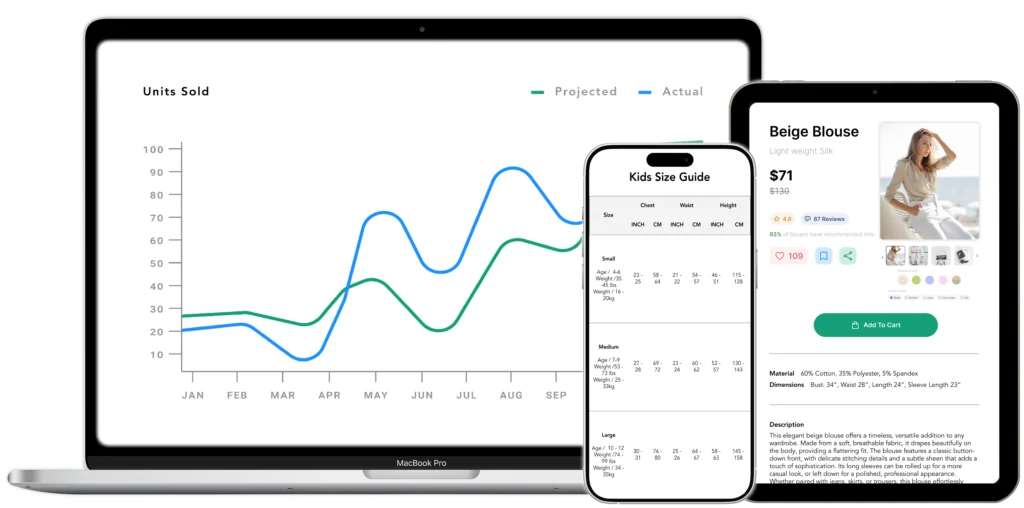
The product information chaos problem
As brands grow, their product data can get stuck in different spreadsheets, email threads, and various different departments. This leads to the data becoming more and more messy. By trying to manage thousands of SKUs using legacy systems such as email and spreadsheets, a business can end up with a product information chaos problem.
Product information chaos can easily lead to errors, delays and team frustration for a number of different reasons.
1 - Multiple versions of the ‘truth’
Most legacy approaches have an issue where each department has its own ‘master’ file. This means that there can be multiple versions of a single piece of information that all need updating whenever a change occurs.
For example, if a product price changes it will need to be updated in the ‘master’ file of every department. This opens the door for a great deal of human error. If the price info is not shared with all of the required team members, it is highly possible that there will be multiple different prices, assigned to the single item, across the business. These multiple versions of the ‘truth’ can cause confusion, frustration and disagreement within the team. Resulting in wasted time and effort that could have been avoided.
2 - Spreadsheet limited functionality
Spreadsheets are designed to deal with numbers and data. They are not able to deal with high resolution images or videos, and are incapable of processing complex product relationships that aren’t covered by built-in formulas.
For example, if a product has multiple colour options it will need to be entered into a spreadsheet multiple times. This leads to teams wasting time on manual tasks that could be avoided such as searching for files, resizing images, and copy-pasting text between cells. It is simply not an efficient way to handle product data effectively.
4 - Communication bottlenecks
If a product lifecycle management (PLM) software and PIM are not connected directly, the handover process can be very messy. It can literally be a case of sharing thousands of files and emails. This kind of approach can easily lead to delays in a product’s launch.
For example, the marketing team may be stuck waiting for the final specifications of a product that can only be found in the inbox of a designer. This results in extra time spent on finding the file and cross-team communication that adds time to a product launch and causes friction.
3 - The risks of human error
Manually typing information into multiple places can be very risky because it invites human error. It only takes a single typing error to cause a number of problems.
For example, if a product weight is entered incorrectly it can quite easily result in shipping errors, warehouse rejection, or customer returns. Not only does this cause an issue within the supply chain. It can also be very difficult to find out exactly where the error was made in order to rectify it.
5 - Regulatory inefficiencies
With the need for DPP (Digital Product Passports) becoming mandatory in the coming years, there is a greater need for products to include a lot more information. Brands will need to track every material, factory, and certification.
Using a spreadsheet to track “Tier 4” sustainability data is virtually impossible. Using legacy systems will inevitably open brands up to legal and reputational risk.
How PIM systems work
PIM systems work by collecting raw data from internal and external sources, enriching it into consumer-ready content, and distributing it to all sales channels.
A complete PIM product information profile is created by pulling in data from multiple silos that usually don’t talk to each other, allowing your team to add enriching data within a secure platform, and pushing approved product data out to the world via APIs, marketplace feeds, and data exports.
Data centralisation and organisation
A PIM creates a central ‘product profile’ that is populated with information from connected systems such as PLM, DAM, and DPPs.
It ensures that there is a full product profile that can be used across multiple sales channels, without the need for recreation of content for different market places.
This allows your product material compositions, high-res marketing images, and sustainability certifications for a single product to live in one centralised place.
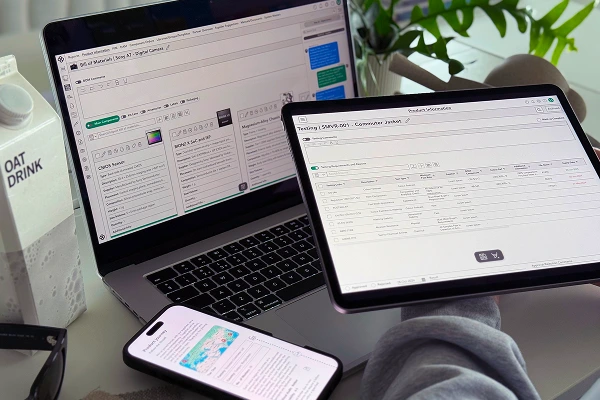
Workflow automation capabilities
If a product profile is not complete within a PIM, it can update a connected PLM to flag this. The PLM can then use automated triggers to update everyone’s workflow.
For example, if a photography image is delayed the timeline can be updated to reflect the change automatically. This ensures that everyone is aware of the delay and is notified of the new expected timeline. This can help to free up a good proportion of your product team’s time.
A PIM can automatically create unique IDs for products and samples which saves a lot of time. It allows you to generate hundreds of colorway and size variants in seconds rather than manually entering data for each one when creating a range of product variants.
All of these workflow automation capabilities help to reduce time spent on administrative busy work.
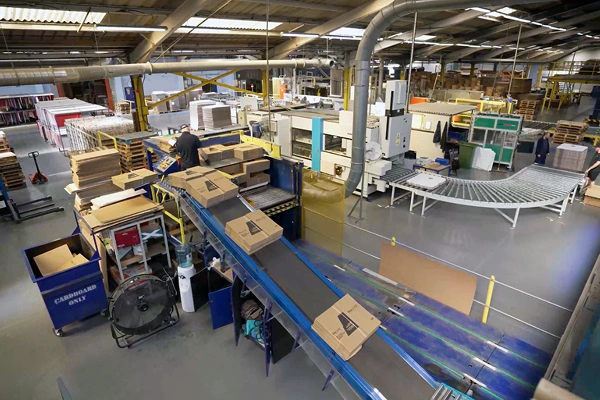
Key benefits of implementing PIM
Implementing a PIM system transforms product management from a manual, reactive process into a strategic, automated workflow. This allows you to take a highly efficient approach to product management with product teams saving time, the number of errors being greatly reduced, and relationships with all parties from manufacture to sales being highly collaborative.
Streamlined product launches
By removing bottlenecks from the supply chain, a PIM can accelerate your time-to-market. It increases the efficiency of your workflow by centralising information, with every team member across a product’s lifecycle using the same data simultaneously. There is no more waiting for marketing copy to be sent, as the PIM updates everything in real-time.
This allows for data to be pushed to multiple sales channels at once. Data is automatically formatted for each platform, ensuring that you never miss a sales window.
Enhanced data accuracy and consistency
Enhanced data accuracy and consistency is driven by a PIM through its centralised data management. This results in consistent product information across channels and further reduces the amount of errors that occur.
Mandatory fields and data validation rules ensure that a product cannot be published if it’s missing a description, weight, or image. The PIM catches errors and prevents incomplete data from being sent to sales channels.
There is no risk of version conflict, as a PIM syncs product data across every touchpoint each time a change is made. All connected channels show the same information at all times.
PIM vs traditional product management methods
Moving from spreadsheets to a modern PIM isn’t just a software upgrade, it’s a total shift from “survival mode” to “growth mode.” Spreadsheets may be comfortable, but they are one of the biggest bottlenecks for scaling product brands.
There are several ways in which a PIM outperform traditional product management methods:
Features
Where is data stored?
How accurate is the data?
Scaling potential
Ease of collaboration
Spreadsheets & Manual Processes
Multiple places (Excel, Email, etc.)
Risk of errors due to manual entry
Performance will lag when scaling with potential crashes
Numerous versions of the same file. High friction.
Spreadsheets & Manual Processes
Within the PIM
Highly accurate data due to automated validation rules
Boundless configuration and growth
Real-time multi user workspace. No friction.
Who needs a PIM system?
PIM systems are needed most by businesses that have data that can no longer be managed by “human memory” or spreadsheets. If you work in a fast-paced product team, a PIM could radically improve your product management capabilities.
Examples of businesses that would benefit most from a PIM:
- Multi-Channel & Global Brands
- Fast-Moving Consumer Goods (FMCG) & Fashion Brands
- Product Manufacturers
If your team is experiencing any of the following pain points, it’s a good sign that you are most likely in need of PIM software:
- You have high product returns due to inaccurate data
- Product launches take a significant amount of time
- You rely on a spreadsheet that has frequent crashes and is hard to use
- You are struggling to meet new ESG or Digital Product Passport (DPP) requirements
Choosing the right PIM solution
Choosing the right PIM solution is a case of looking beyond a list of features and focusing on how the tool fits your workflow.
The biggest issue you can face when introducing a new PIM software is a lack of user adoption from your team. This can be because a PIM is too rigid or technically confusing. At Bombiix, we take a ‘workflow first’ approach to onboarding. This ensures that your team is comfortable with our software and that they see it as the best option.
How a PIM integrates with other platforms should be a big consideration too. You don’t want to be waiting on a long winded development implementation that enables 2 platforms to communicate effectively or rely on manually downloading and uploading data via spreadsheets every time some product information needs changing. Our solution integrates directly with PLM, and DAM systems to enable automatic data flow.
How future-proof a platform is should be considered. Especially if you expect your company to experience a great deal of growth. You don’t want to be dealing with bottlenecks in expanding your business due to a limited PIM system that requires a developer every time you add a new attribute. Our PIM software has boundless configuration that is capable of keeping up with any level of growth.
There are many other things that you will need to consider too. However, we have provided 4 big questions to ask when choosing a PIM for your business:
- Can it handle my specific complexity?
- Does it support ESG/Compliance?
- Is the support “human”?
- Is it an open system that allows for easy export of your data?
For all of these questions, the answer for our PIM software is a resounding yes!
FAQs
How long does it take to implement a PIM system?
This depends on the PIM system. We offer fast onboarding with value visible in days, not months, through direct live support and zero setup fees.
Can PIM integrate with existing business systems?
Yes, quality PIM platforms connect seamlessly with ERP, marketplaces, and communication tools without complex middleware requirements.
Is PIM suitable for small to medium-sized businesses?
Yes, PIM solutions are suitable for small to medium-sized businesses. They provide affordable intelligence that scales with your business, eliminating the need for additional staff while improving productivity.